The Newspaper Trick That's Breaking TikTok (And Why Your Grandpa's Marketing Still Works)
There's a clip that's been living in my head for weeks.
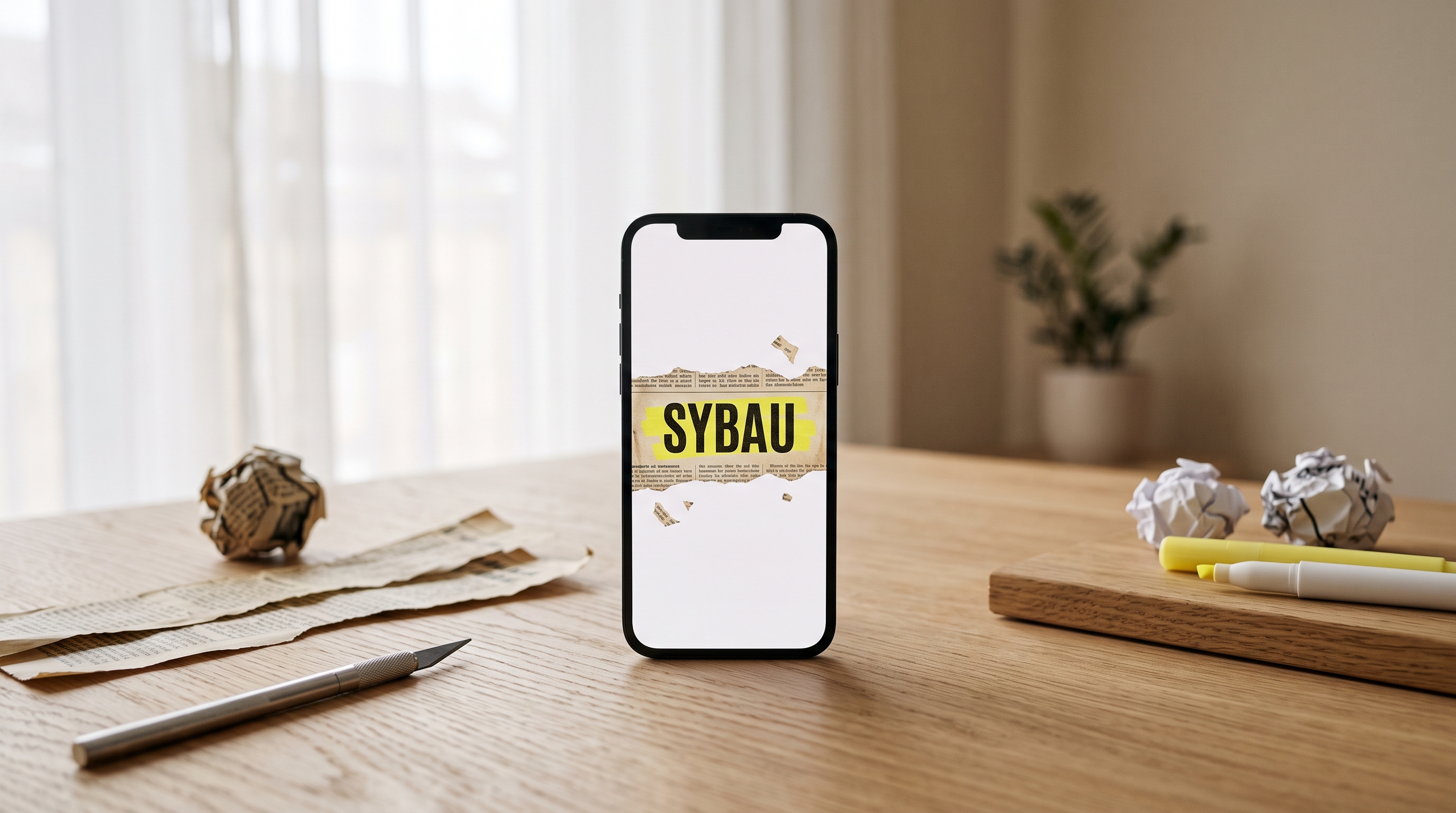
It's a TikTok. Nothing fancy. Someone typed a single word — just a brand name — and it appeared highlighted in yellow across what looked like actual newspaper pages. Old paper textures, justified columns, serif fonts. The clip was maybe four seconds long. It had 2.3 million views.
No dancing. No trending audio. No face on camera. Just a word, highlighted on a newspaper, animated to feel like you were flipping through a stack of clippings someone left on your kitchen table.
And I couldn't stop watching it.
That's not an accident. That's a century of print psychology compressed into a vertical video. And if you're still approaching short-form content like it's a brand-new medium that requires brand-new thinking, you're making the game way harder than it needs to be.
The scroll is the new newsstand
Here's what most people get wrong about TikTok, Reels, and Shorts: they think the medium is the message. They obsess over platform-specific hacks — posting times, hashtag counts, audio trends — while ignoring the thing that actually determines whether someone stops scrolling.
The hook.
And hooks aren't new. They're ancient. Every newspaper editor since the 1800s understood that you have roughly one second to earn the next five. That's why headlines exist. That's why the most important information goes above the fold. That's why tabloids use massive, bold, sometimes absurd type — because at a newsstand, you're competing with thirty other papers for the same pair of eyes walking past.
Sound familiar?
A TikTok feed is a newsstand. An Instagram Reel is an above-the-fold decision. A YouTube Short is a headline competing with a hundred others. The physics of attention haven't changed. The surface area just got smaller.
Why the newspaper aesthetic hits different on a phone screen
Let me get specific about something I've been noticing. There's a growing wave of creators using newspaper-style visuals — highlighted text on aged paper, magazine cutout letters, press clippings — as their primary hook format. And it's working absurdly well.
Tools like Paper Animation have made this dead simple. You type a word, and it generates animated newspaper frames complete with authentic typefaces, justified columns, and paper textures that look like they've been sitting in someone's attic since 1987. The highlight feature in particular — where your keyword appears marked up in yellow across different clipping layouts — has become a go-to for creators who understand something important:
Familiarity creates trust. And trust earns attention.
When you see a highlighted newspaper clipping, your brain doesn't process it as "content." It processes it as evidence. Something worth saving. Something someone took the time to cut out and mark up. That's a psychological shortcut that no amount of motion graphics or AI-generated B-roll can replicate.
It's the same reason infomercials still work. Not because people are gullible — because the format signals a specific kind of authority. "This was on TV, so it must be real." The newspaper highlight does the same thing, but for a generation that grew up seeing clippings pinned to their parents' bulletin boards.
The three hooks that never stopped working
If you strip away the platform-specific noise, the hooks that perform best on short-form video in 2025 are the same ones that performed best in direct mail in 1965. I'm not being cute. This is the list:
The curiosity gap. "You won't believe what happened when..." worked in tabloid headlines. It works in TikTok captions. It works in Reel text overlays. The mechanism is identical: open a loop in someone's brain that they can only close by consuming your content. Direct mail copywriters called this the "itch you have to scratch." David Ogilvy wrote about it in the 1960s. It's the same itch.
Social proof as spectacle. Old magazine ads didn't just tell you a product was good. They showed you a dentist recommending it, a celebrity using it, a "real person" giving a testimonial. The modern version? Reaction videos, duets, stitches, comment-reading content. It's still someone else validating the thing you're already curious about. The wrapper changed. The wiring didn't.
The "wait, what?" disruption. Newspaper editors called it burying the lede — on purpose. You'd start reading a story about a dog show and by paragraph three, someone had stolen a million dollars. The TikTok version is the unexpected pivot: you think the video is about one thing, then the visual or the text completely shifts. That highlighted newspaper clipping appearing mid-video? That's the pivot. That's the "wait, go back" moment. And it works because it breaks the pattern your brain was predicting.
Short-form isn't a trend. It's the default.
Let me be blunt about this because I think a lot of people are still hedging.
Short-form vertical video is not a phase. It's not a "nice to have" in your content strategy. It is the primary way people between the ages of 13 and 35 consume information, entertainment, and product recommendations. Full stop.
TikTok didn't just create a format. It rewired how a billion people evaluate whether something deserves their attention. And Instagram and YouTube didn't add Reels and Shorts because they were bored — they added them because the data was screaming at them. Short-form is where the attention lives. And attention is the only currency that matters before anything else can happen — before the click, before the follow, before the purchase.
If you're a brand, a creator, a freelancer, or honestly anyone who needs people to care about what you're making: short-form vertical video isn't optional anymore. It's the front door.
The old playbook, repackaged
Here's what I find fascinating — and kind of reassuring. The creators who are winning on short-form aren't the ones with the best equipment or the fanciest editing software. They're the ones who understand persuasion fundamentals. The stuff that worked before the internet existed.
They know that a highlighted keyword on a newspaper background stops thumbs because it triggers the same response as a bold headline at a newsstand.
They know that a curiosity gap in the first frame of a Reel is the same mechanism as a teaser on a direct mail envelope.
They know that showing a product being used by "someone like me" is the same play as every magazine testimonial ad from the last century.
The tools have gotten better. Paper Animation lets you create those newspaper-clipping hooks in thirty seconds. CapCut makes editing accessible to anyone with a phone. But the tools aren't the advantage. The understanding is.
So what do you actually do with this?
Stop overthinking the format and start studying the fundamentals.
Go read old advertising books. Not for nostalgia — for frameworks. Ogilvy on headlines. Schwartz on awareness levels. Halbert on opening lines. Everything they wrote about earning attention in a crowded space applies directly to a TikTok feed. The only difference is you have less time and more competition.
Use visual hooks that carry built-in credibility. The newspaper aesthetic works because it borrows authority from a format people already trust. A highlighted word on a newspaper clipping reads as "this matters" before the viewer even processes what the word is. That's not a design trick — that's a psychological principle with a hundred years of data behind it.
Lead with the disruption, not the explanation. Your first frame — the first thing someone sees before they've decided to keep watching — needs to be the equivalent of a headline that makes you pick up the paper. Not a logo. Not a greeting. Not "in this video I'm going to show you..." Start with the thing that makes them stay.
And commit to short-form as a primary channel, not an afterthought. The brands repurposing their YouTube videos into vertical clips are losing to the creators who think vertical-first. The businesses posting their blog content as text-on-screen carousels are losing to the ones who understand that the scroll is an entirely different cognitive mode than the click. Meet people where they are, in the format their brain is already primed for.
The punchline nobody wants to hear
Marketing doesn't really change. Not the core of it. What changes is the delivery mechanism — the surface. Newspaper to radio. Radio to TV. TV to internet. Internet to social. Social to short-form vertical video.
Every time the surface shifts, people panic. They think the old rules are dead. They chase new tactics and ignore the principles underneath. And every time, the people who win are the ones who realize the psychology stayed the same.
A highlighted word on a newspaper clipping. A bold headline above the fold. A curiosity gap that won't close until you read the next line.
These aren't retro tricks. They're the foundation. And right now, on the fastest-growing content format in history, they're working better than ever.
The only question is whether you're going to use them.